Your skeleton is not the fixed scaffolding it appears to be. It's a living tissue in constant renovation: old bone dismantled, new bone laid down, all day, every day. For most of your adult life the two crews work at roughly the same pace. Oestrogen is one of the site managers keeping them in balance, and when it starts to fall in perimenopause, the demolition crew begins to outpace the builders. Bone density can drop meaningfully in the five years around the final period; some estimates put it as high as 10%.
You can't feel any of this happening, which is exactly why it's worth acting on now, while the fix is as pleasant as dinner.
How much do you actually need?
UK guidance sets the reference intake for adults at around 700mg of calcium a day. Many menopause specialists and bone health charities suggest women aim higher through the transition, somewhere in the region of 1000 to 1200mg, on the reasoning that remodelling has tipped toward loss and the raw material matters more. The exact number is debated; the direction of travel isn't. Most UK women currently land below even the 700mg mark.
Why food-first beats the pill for most of us
Here's where we part company with the supplements aisle. Some trial evidence has linked high-dose calcium supplements, specifically supplements, not food, with questions around cardiovascular risk. The research is genuinely contested and far from settled, but no such signal has appeared for calcium eaten as food. Food also delivers calcium in smaller, spread-out doses your gut absorbs more efficiently, wrapped in protein, vitamin K and other nutrients bone needs anyway.
The sensible reading: if you can get there with food, get there with food. Supplements have a place when diet genuinely can't cover it, and that's a conversation worth having with a GP rather than a shop shelf.
"No trial has ever raised a safety question about calcium eaten as yoghurt, sardines or tofu. The questions all attach to the pills."
The heavy-lifters, per portion
The good news is that 1000mg is closer than it sounds once you know where calcium actually lives:
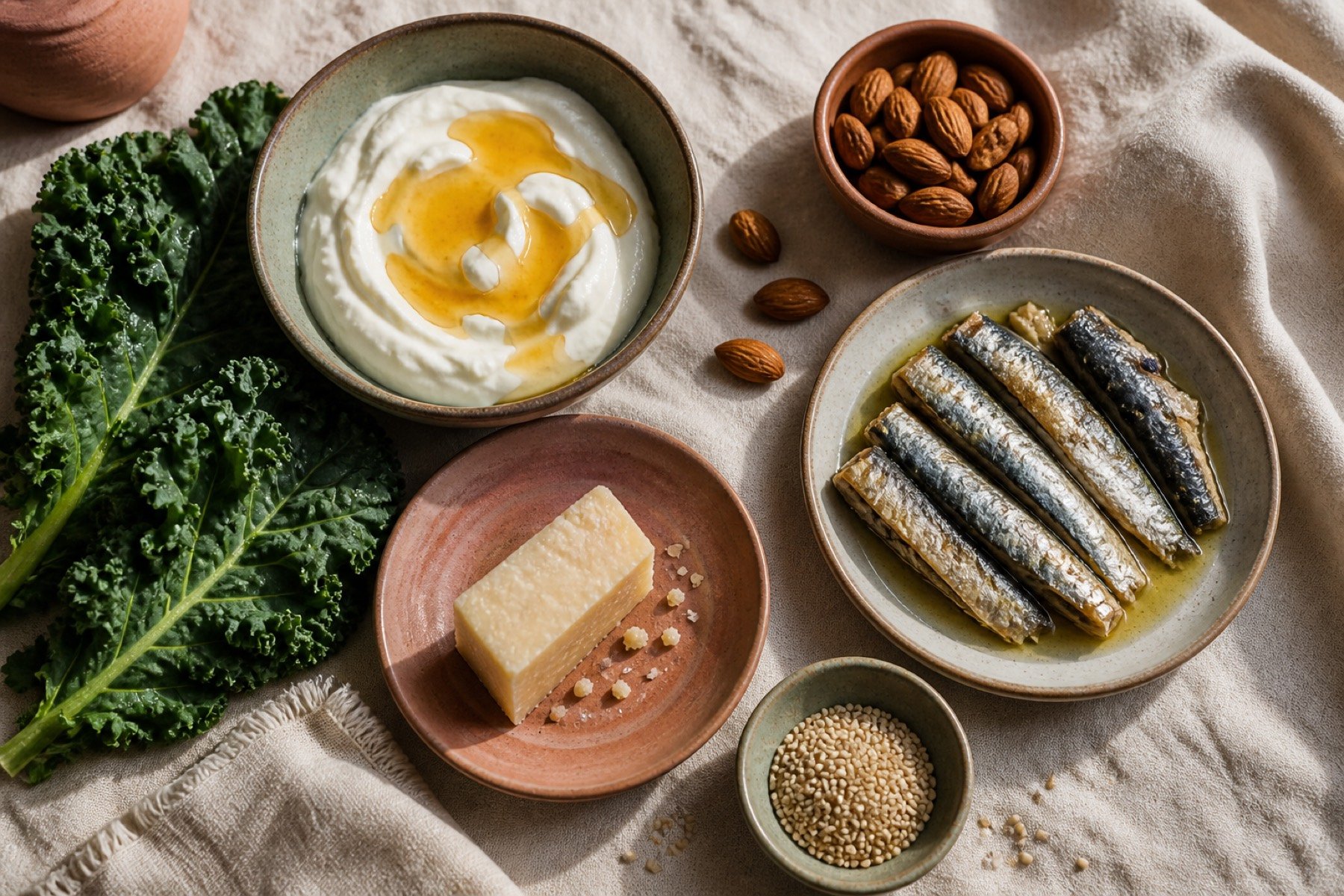
- Dairy remains the easiest route: a 200ml glass of milk is roughly 240mg, a 150g pot of yoghurt around 200mg, and 30g of hard cheese about 220mg. Yoghurt at breakfast plus cheese in lunch is half your target before dinner.
- Tinned sardines, bones in: around 400mg in a small tin, because the soft bones are the point. One of the best calcium-per-penny foods in the supermarket.
- Tofu set with calcium: check the label for "calcium sulphate"; a 100g portion can carry 300mg or more.
- Fortified plant milks: most are fortified to match dairy at around 120mg per 100ml, but the organic versions often aren't fortified at all. Shake the carton too; the calcium settles.
- Sesame and tahini: a tablespoon of tahini adds roughly 60 to 90mg, which is why it turns up so often in our recipes.
- Almonds: about 75mg per 30g handful, with protein and magnesium along for the ride.
- Kale and watercress: modest per portion (around 100mg and 40mg respectively) but well absorbed, unlike their more famous cousin below.
The spinach myth
Spinach looks like a calcium hero on paper, and it isn't one. It's rich in oxalates, compounds that bind its calcium so tightly that only a small fraction is absorbed. Spinach is still a wonderful food; just don't count it toward your calcium arithmetic. Kale, watercress, bok choi and broccoli are the greens that actually deliver.
Vitamin D: the doorman
Calcium can't get into the building without vitamin D on the door; your gut needs it to absorb calcium properly. From roughly October to March, UK sunlight is too weak to make enough, which is why the NHS advises everyone in the UK to consider a 10 microgram vitamin D supplement through autumn and winter. It's the one supplement in this story with mainstream guidance firmly behind it, and it costs pennies.
Where to start tonight
Put a tin of sardines on toast this week, properly: sardines on tomato-rubbed sourdough takes ten minutes and carries more calcium than most supplements. Or try our calcium tofu and sesame noodle soup, braised butter beans with kale and tahini, or a batch of frozen Greek yoghurt bark for the freezer. The whole collection is in our bone and muscle strength recipes, and the research behind every claim above is laid out on our bone and muscle science page.