It's oddly specific, isn't it? Not 1am, not 5am: somewhere around 3 o'clock, eyes open, brain immediately in gear, and then an hour of ceiling-staring before you drift off just in time for the alarm. If this is your current normal, you're in enormous company. Sleep disruption is one of the most commonly reported symptoms of the menopause transition; in the long-running SWAN study, difficulty sleeping affected somewhere between a third and a half of women, depending on the stage. And the 3am version has real mechanisms behind it, not just bad luck.
Mechanism one: the internal thermostat
Falling oestrogen narrows what researchers call the thermoneutral zone: the band of core temperatures your body tolerates before it reacts. When the zone shrinks, a tiny rise in core temperature that you'd once have slept straight through now triggers a full heat-dump response: flushing, sweating, and a surge of adrenaline that snaps you awake. Because core temperature naturally dips and shifts through the night, the second half of the night is when many women get caught. You may not even register it as a night sweat; sometimes all you notice is that you're suddenly, completely awake.
Mechanism two: the progesterone lullaby fades
Progesterone is more than a reproductive hormone. Its metabolite, allopregnanolone, acts on the same GABA receptors in the brain that sedatives target, which is why progesterone has a mild, genuinely calming effect. In perimenopause, progesterone is typically the first hormone to fall, and often falls earlier and more steeply than oestrogen. Losing that background sedation is linked to lighter, more fragmented sleep: you still fall asleep fine, but you surface more easily when anything (a warm duvet, a snoring partner, a 3am cortisol drift) gives you a nudge.
Mechanism three: melatonin was already leaving
Separately from hormones, melatonin production declines with age in both sexes, and studies suggest the decline steepens through midlife. Melatonin doesn't knock you out like a sleeping tablet; it's a timing signal that tells your body clock night has started. With less of it, the signal is quieter, sleep tends to arrive later and break up earlier, and the whole architecture of the night gets a little flimsier. Stack all three mechanisms together and 3am stops being a mystery.
"The 3am wake-up isn't one problem. It's three quiet mechanisms overlapping, and each one responds to slightly different things."
What food can honestly do
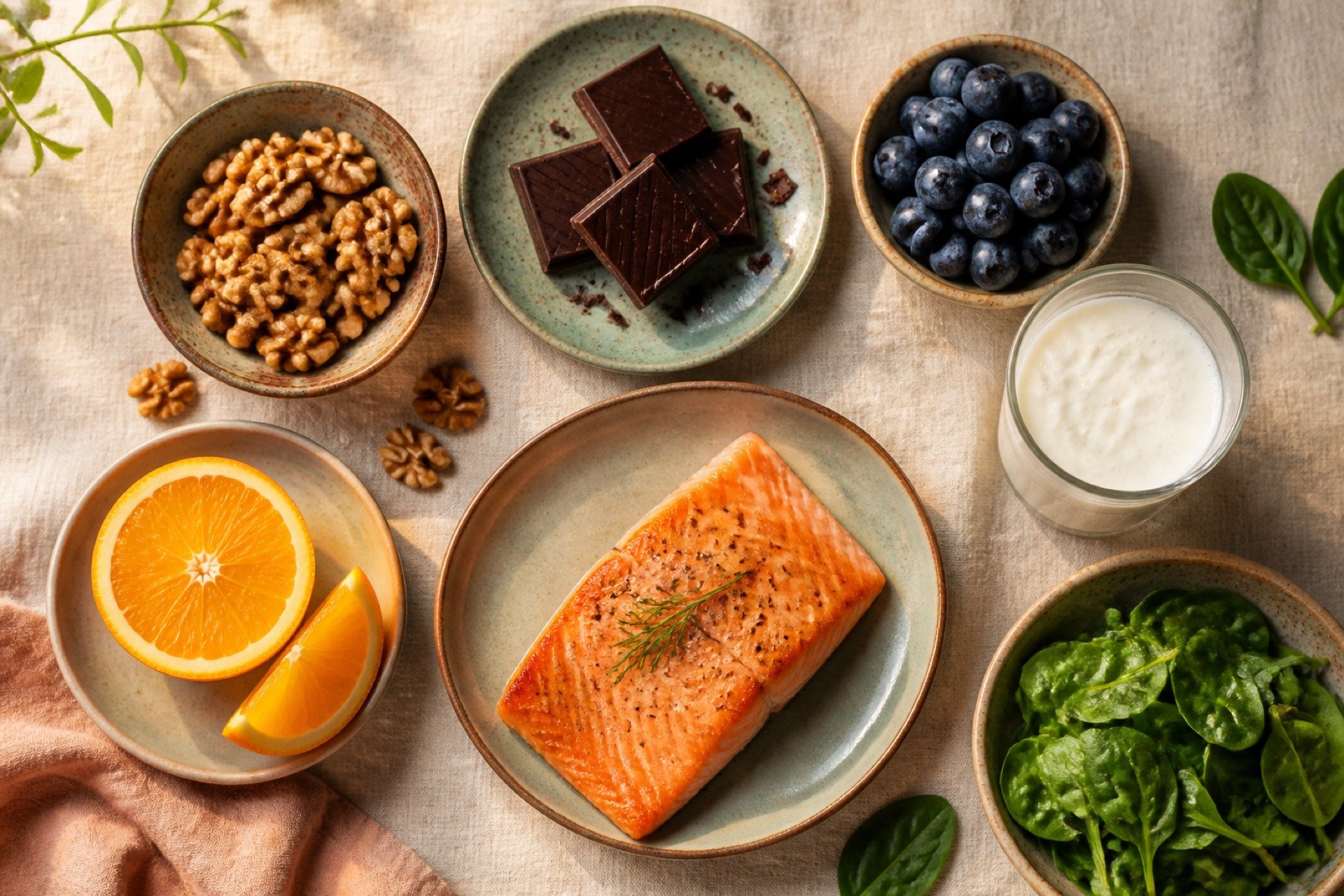
Let's be straight: no supper cures perimenopausal insomnia, and anyone promising otherwise is selling something. But the evidence points to a handful of habits that shift the odds:
- Eat earlier, and lighter, in the evening. A large late meal raises core temperature and keeps digestion busy exactly when your narrowed thermoneutral zone needs calm. Finishing dinner two to three hours before bed is a low-cost win.
- Rethink the nightcap. Alcohol is sedating at first, then rebounds: as it's metabolised a few hours in, it fragments sleep and raises body temperature. If your wake-up is reliably 3am after wine with dinner, this is suspect number one.
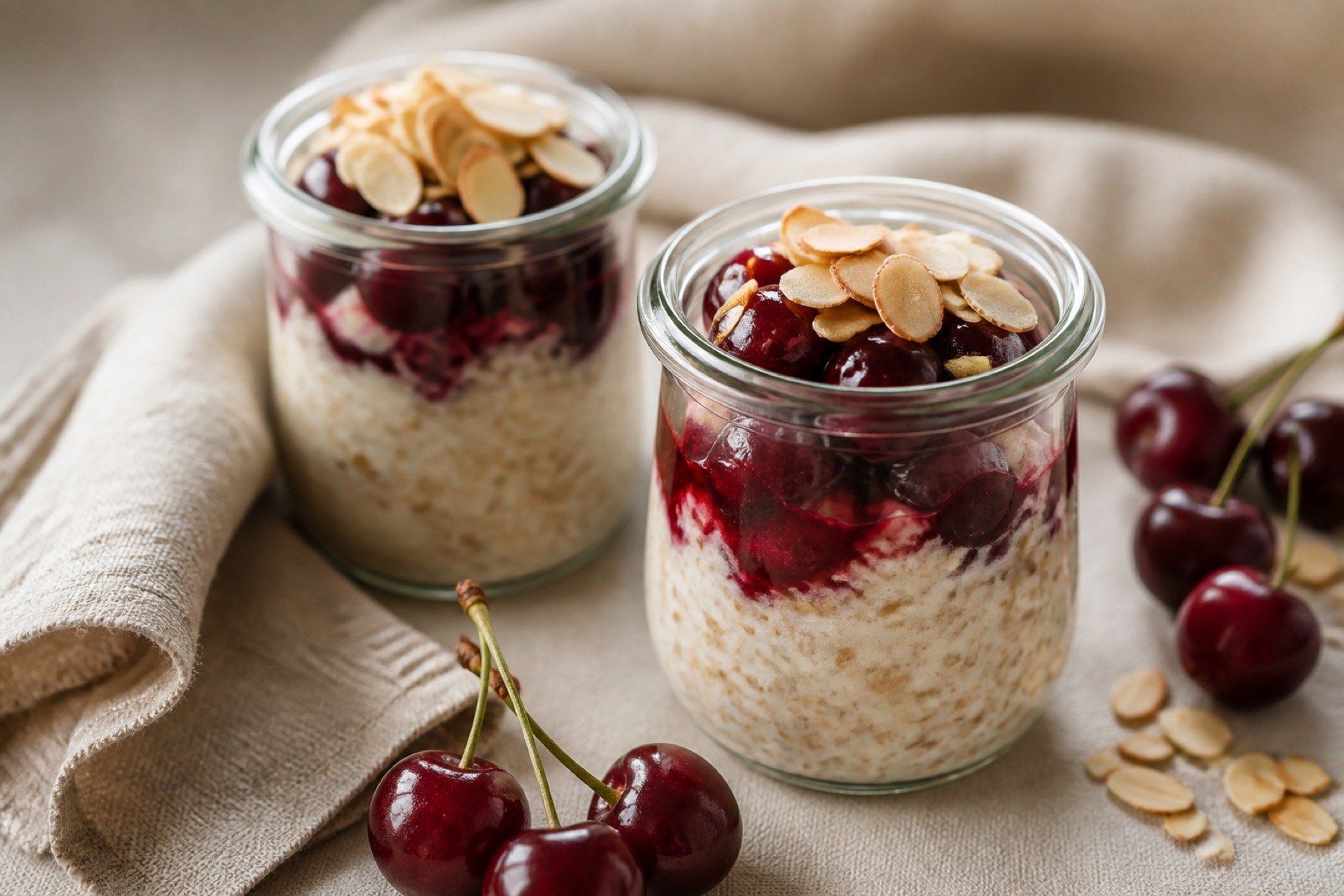
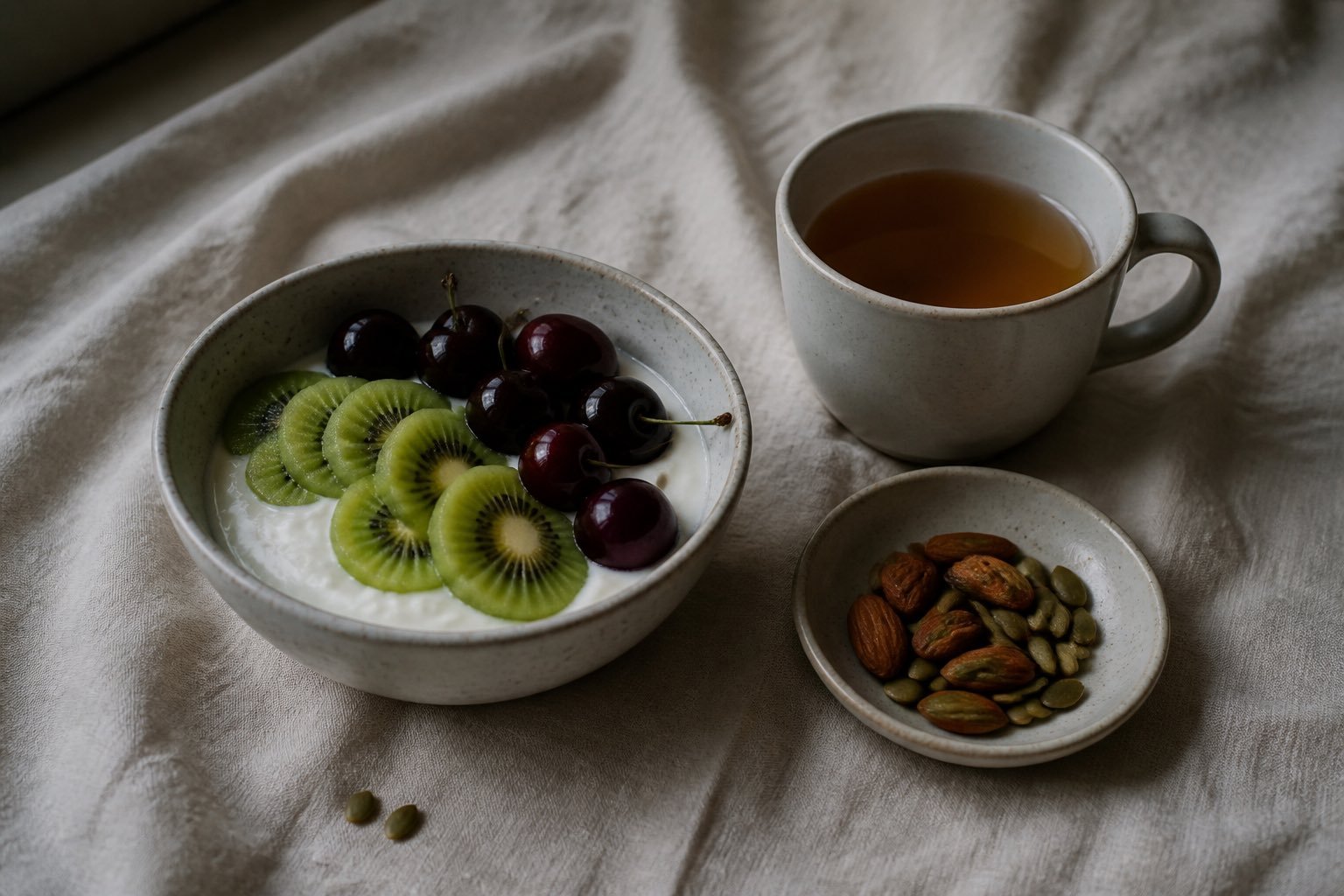
- Tart cherries and kiwi have small but real trials behind them. Tart Montmorency cherries contain measurable melatonin, and small randomised trials suggest tart cherry juice may modestly increase sleep time. Two kiwis an hour before bed improved sleep onset and duration in a small study. Neither is a miracle; both are food, so the downside is zero.
- Magnesium: mixed but promising. Meta-analyses of magnesium for sleep are cautious, partly because trials are small, but low magnesium status is common and food sources (pumpkin seeds, almonds, leafy greens, wholegrains) carry no risk. Getting it from supper rather than supplements is the sensible default.
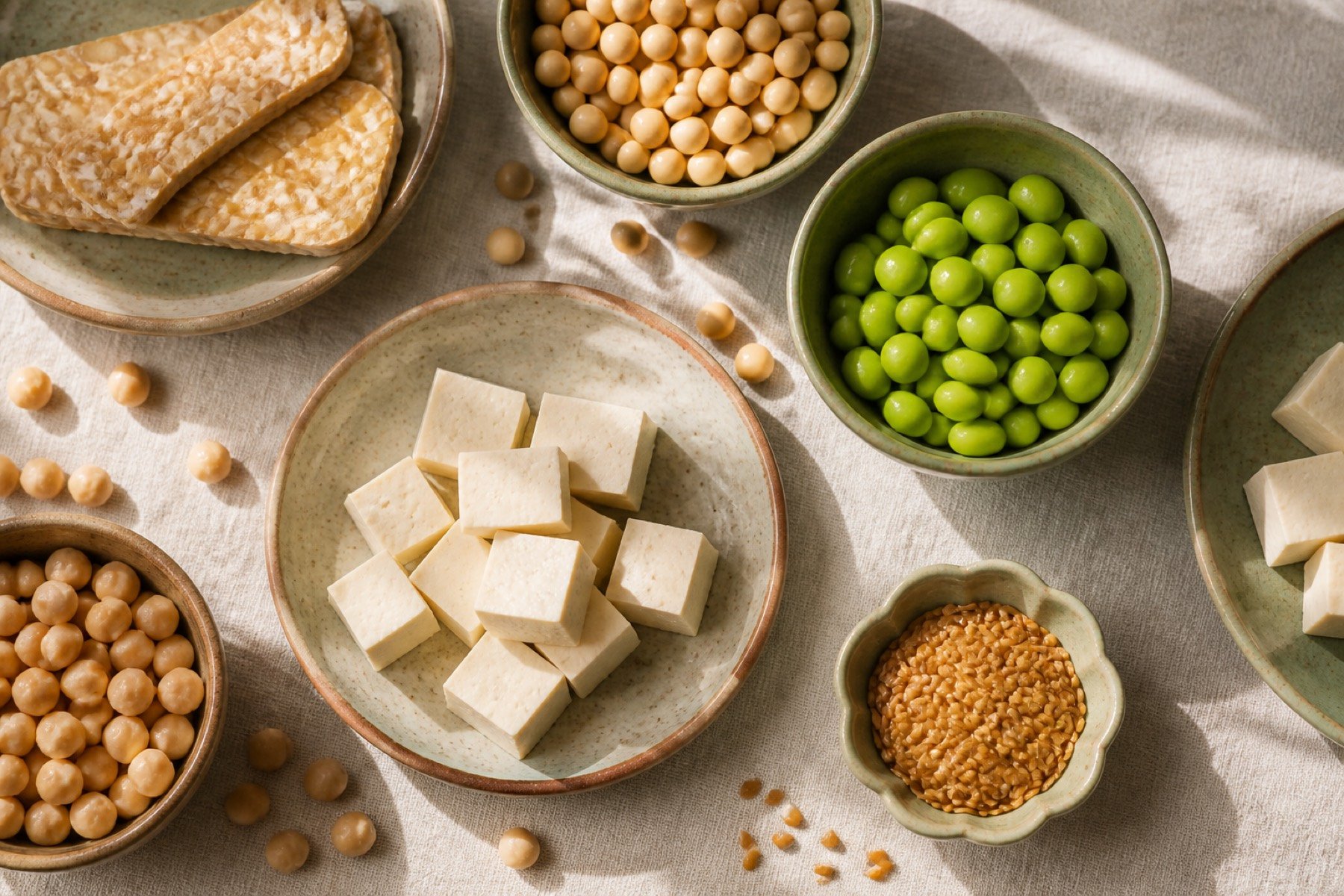
- Protein at dinner steadies the night. A supper with decent protein and slow carbohydrates helps keep blood sugar stable overnight; a sharp glucose dip is one plausible trigger for those adrenaline-tinged wake-ups. It also feeds tryptophan, the amino acid your brain converts towards melatonin.
What food can't do is override a bedroom that's too warm, a scroll session at midnight, or untreated severe symptoms. If night sweats are drenching or sleep loss is wrecking your days, NHS guidance is clear that effective treatments exist, HRT among them, and your GP is the right first stop. Food is the supporting act, not the headliner.
Something to actually cook
Start tonight with a tart cherry chia pudding made after dinner, or a kiwi and yoghurt bedtime bowl if you want the two-kiwi trial on your own terms. Our full collection of better-sleep recipes is built around earlier, protein-steady suppers, and the evidence behind every claim above is laid out on our sleep science page.